 7:12
Village of Tuxedo Park Board of Trustees · September 17, 2026
September meeting: taxes, infrastructure & property rights
The tax discussion, David McFadden’s response memorandum, Exhibits A–J, and the meeting’s related public comments and property-use debate.
On this page: Hickey Freeman video
Letter request
Tax discussion
Wording clarification
Response memo
Exhibits A–J
Boathouse exchanges
More clips
Meeting documents
The Hickey Freeman shoot · Fall 26 campaign
So this is what all the fuss is about?
No villagers were harmed in the making of this video.
Featured discussion
The request for a letter about taxes
7:12
Scherer confirms his position on the earlier tax decreases
In response to McFadden, Scherer confirms that, with the information he now had, he would not have voted for a tax decrease.
Watch the exchange and surrounding discussion →Written response · September 18
Read the response memorandum.
Former Mayor David McFadden’s 13-page response addresses the prior administration’s tax decisions, infrastructure record, and responsibility for current decisions.
Read the response memo (PDF)The discussion
What the Board asked
Deputy Mayor Michele Lindsay asked the McFaddens to circulate a letter explaining the tax discussion. Joshua Scherer criticized the earlier tax decreases and later expressly confirmed that, with the information he now had, he would not have voted for a tax decrease.
That describes their statements, not agreement with their explanation for current tax increases.
See the dated clarification and clip references →David McFadden’s response
What the memo argues
The September 18 memorandum disputes attributing current tax increases to the prior administration’s tax restraint or infrastructure record.
It asks residents to examine budgets, project history, borrowing, and decisions by each administration.
Wording clarification · September 27, 2026
The letter request and Scherer’s later confirmation
The initial Lindsay/Scherer clip does not contain the entire exchange. The later public-comment clip includes Scherer’s explicit confirmation about how he would have voted. Both passages belong in the record; the original September 17 account and September 18 response memorandum remain preserved.
Displayed transcript excerpt · Later exchange · 3:24–3:46
Scherer’s response to McFadden
YouTube’s displayed transcript records McFadden at approximately 3:24: “Okay. But you did say you did say that if you had the information in front of you that you had now, then you wouldn’t have voted for a tax decrease.” At approximately 3:34, it records Scherer’s reply: “That’s correct. That’s what I said.” Watch the exchange in the later meeting clip.
The exchange continues with McFadden disputing Scherer’s rationale and Scherer replying that McFadden had not explained his rationale. The linked 4:17 clip preserves the broader discussion.
The community-letter request
Lindsay requested a letter explaining the discussion and offered to help write it. At approximately 4:15, the displayed transcript includes “circulate a letter to explain what we have talked about tonight”; at 4:24, it includes “I’d be happy to work with you on writing that letter.” Review Lindsay’s request in the clip.
Our original account and response memorandum describe how David McFadden understood the administration’s argument. That interpretation should not be read as a verbatim demand that he admit responsibility for current tax increases.
The earlier tax decreases
At approximately 5:46 in the initial clip, Scherer’s displayed transcript reads: “with the new information I’ve received, I think those tax decreases were a mistake”. His later confirmation, reproduced above, goes further: he agrees that with his present information he would not have voted for a tax decrease. Review Scherer’s initial comments; review his later confirmation.
Earlier, at approximately 2:18, Lindsay’s displayed transcript reads: “That could have been accomplished with a 0% tax hike.” Retaining tax revenue rather than cutting taxes is not the same as raising taxes. Review the preceding financing discussion.
The record supports saying that Scherer confirmed he would not have voted for a tax decrease. That should not be reduced to only his earlier “mistake” remark. It remains distinct from the original account’s non-verbatim phrase “would instead have voted to increase taxes”; the current summary now states his confirmed position directly.
David McFadden’s response memorandum continues to dispute attributing current tax increases to the prior administration’s tax restraint or infrastructure record. The memorandum, exhibits, and original dated account remain unchanged.
Source note: Quoted passages above reproduce YouTube’s displayed transcripts, which contain apparent caption errors. They are not an official transcript or an independently audio-verified transcription; the linked recordings are provided for comparison. Timestamps refer to the individually identified 7:12 and 4:17 clips, not the full meeting. The later confirmation was located in an existing meeting excerpt, not through a separate review of the full-length original recording.
Read the preserved original account and source documents →Supporting evidence
Find the exhibit you need
Fiscal condition and oversight: A–D. Project history, financing, and operations: E–J.
These are the tax memorandum’s Exhibits A–J. The property-rights submission has a separate Exhibit A–D series.
Two exchanges in context · September 17, 2026
Boathouse comparisons, rentals & photoshoots
These passages show former Mayor David McFadden’s explanation of the existing rules and his comparison of the two boathouses, together with the surrounding discussion. The meeting statements and the published Village Code are identified separately below.
McFadden’s interpretation of the boathouse comparison
McFadden’s clarification: “It is my interpretation that the boathouses are comparable”. This clarification expresses his interpretation; it does not assert that the two boathouses occupy equivalent or separately assessed tax lots.
Meeting record: Around 4:21, the audio-based transcription reads: “It’s on its own property. It’s exactly like my boathouse.” The response distinguishes the Club as commercial property rather than a residence with accessory structures. Watch the quoted passage.
Watch from 3:35 with the surrounding discussion →Existing Code prohibits residential use of boathouses
Former Mayor David McFadden explains that existing restrictions already address residential rentals and distinguishes his supervised photoshoot from an overnight rental. In clarifying this record, he emphasizes that his statement rests on his experience as mayor and knowledge of the Village Code, not speculation.
Around 2:02, the clearer audio-based transcription reads: “And number two, boathouses are not allowed to have a C of O. They can’t be rented.” He then states: “My photoshoot was not a rental. No one stayed overnight.” Watch the quoted passage.
The Code itself: § 100-6(B) expressly provides that “a boathouse under no circumstances shall be used for residence purposes.” This residential-use prohibition is stated in the published law, not merely an opinion offered at the meeting. Read § 100-6(B).
Watch from 1:42, including the follow-up discussion →Source note · Updated September 27, 2026: The quoted passages were checked using two automated speech-to-text passes on audio extracted from the original uploaded video files (Whisper small.en and medium.en). Both agreed on the two-sentence boathouse comparison; the larger model resolved the C-of-O wording that the smaller model garbled. These are audio-based transcriptions, not a human-certified verbatim transcript. Times refer to the linked clips, not the full meeting. Code citations identify the published provisions separately from the speakers’ statements. The original footage, dated account, memorandum and exhibits are unchanged.
Eight more continuous excerpts
Public comments & property-use discussion
 1:02
 4:17
 5:01
Claudio Guazzoni: public comments
Claudio Guazzoni’s* Public Comments: An Ironic Lecture on Monetizing Property. After promising to speak for less than the previous speaker, Mr. McFadden, who spoke for 3 minutes and 40 seconds, Guazzoni spoke for approximately 4 minutes and 45 seconds without being cut off by the mayor. He questioned the commercial use of residential property and, in my opinion, made an apparent secondhand jab at the McFaddens, by inference, through his “trailer park” and “GoFundMe” remarks. Yet the New York Post previously reported two city enforcement actions involving short-term rental listings at his own Manhattan property. Residents can judge the consistency of his position for themselves. Read the reporting.
*Self-proclaimed public advocate.
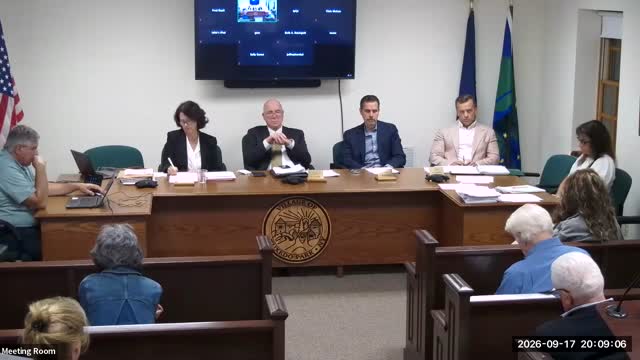 2:37
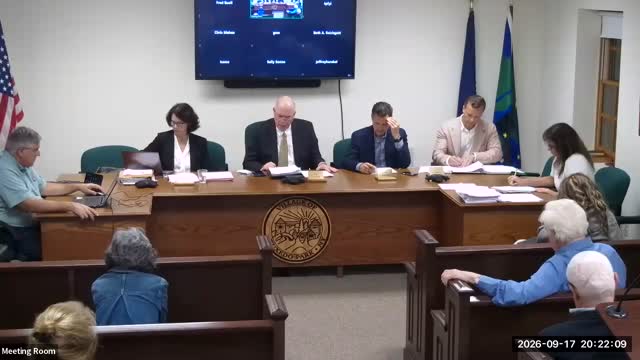 5:21
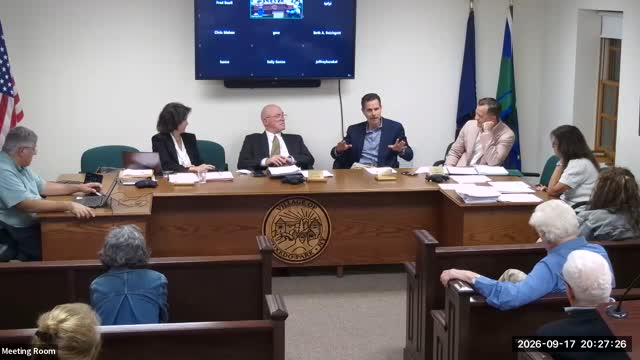 4:20
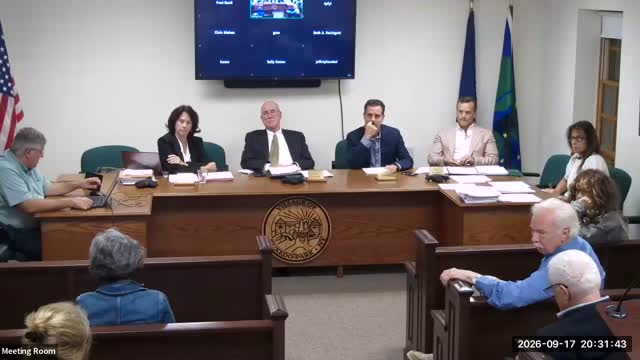 4:44
 2:56
Meeting record
Agenda, questions & public statement
September 17 Board meeting agenda
The items scheduled for discussion.
Questions submitted for the record
The email transmitting questions to the Board.
Questions for the Board of Trustees
The complete advance questions.
Robin McFadden’s statement
The statement read into the record.
Related September correspondence and records
Police FOIL response and source documents
Summary, original email, determination, and redacted production.
FOIL appeal and Coalition response
The filed appeal and supporting records.
Requests for public records
Correspondence and attachments.
Read the original September 17 meeting account
Dated meeting account, preserved as published. The September 18 response memo and supporting exhibits are available above.
September 17 Board meeting record
Mayor Citrin’s Board Blames Mayor Mac’s Administration for Today’s Tax Hikes
The Records Tell a Different Story.
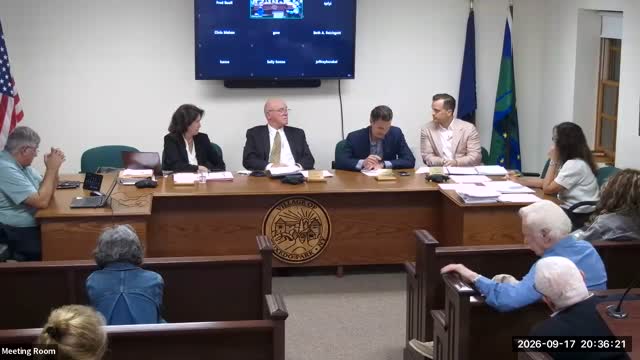
The official agenda described a continued discussion of a proposed Village Code amendment concerning the “prohibition of rentals of non-residential structures to the general public.” Before the meeting, David and Robin McFadden submitted detailed questions for the official record. Robin then read a statement into the record during public comment.
Read Mayor Mac’s Response to Mayor Citrin’s Accusations Regarding Property-Tax Increases and Infrastructure
September 17 Board of Trustees meeting · Response memorandum with Exhibits A through J
View the record →
During the discussion, Deputy Mayor Michele Lindsay challenged a statement I previously submitted concerning the combined effect of rising taxes, increasing debt service, appropriated reserves, continuing infrastructure needs, and broader restrictions on private-property rights:
“Taxes are rising, debt service is increasing, reserves are being appropriated, and important infrastructure needs remain. Combining those financial pressures with broader restrictions on private-property rights risks discouraging prospective buyers, narrowing the market, and placing downward pressure on property values.”
Deputy Mayor Lindsay suggested that the current Board’s infrastructure spending and property-tax increases were necessary because my administration had deferred infrastructure work or had not raised sufficient taxes to pay for it.
Trustee Joshua Scherer then stated, in substance and not as a verbatim quotation, that he had voted to lower property taxes during my administration but, based on what he knows now, regrets that vote and would instead have voted to increase taxes.
I understood their position to be that my administration’s decision not to impose larger tax increases contributed to the Village’s present financial circumstances and forced the current Board to raise residents’ property taxes.
Deputy Mayor Lindsay asked me to submit a letter stating whether I agree that those assertions are true. I will provide that written response.
I do not agree with their characterization, and I intend to respond with the underlying financial records: budgets, tax levies, debt schedules, reserve balances, capital spending, infrastructure records, and Board minutes. In other words, I will respond with receipts.
Residents should be able to evaluate the actual documents rather than competing recollections or political assertions.
Official agenda and pre-meeting submission
September 17 · Official agenda
What the Board Scheduled for Discussion
Village of Tuxedo Park Board of Trustees regular meeting agenda · PDF
September 17 · Sent at 3:51 PM
Questions Submitted for the Record Before the Board Discussion
Email sent to the Mayor and Trustees before the meeting · PDF
September 17 · Email attachment
The Questions the Board Was Asked to Answer
Complete questions concerning the proposal, unanswered records requests, and the missing August 20 recording · PDF
Statement read into the record during public comment
Meeting update: The September 17 meeting was quite contentious. A fuller meeting report and the supporting financial record will follow.