A new filming proposal. Room for a better balance.
The Village has circulated proposed changes to Chapter 51. Removing the commercial-gain prohibition is progress. Quiet photoshoots, creator content, and community livestreams still need a practical, proportionate path.
Our response · David and Robin McFadden
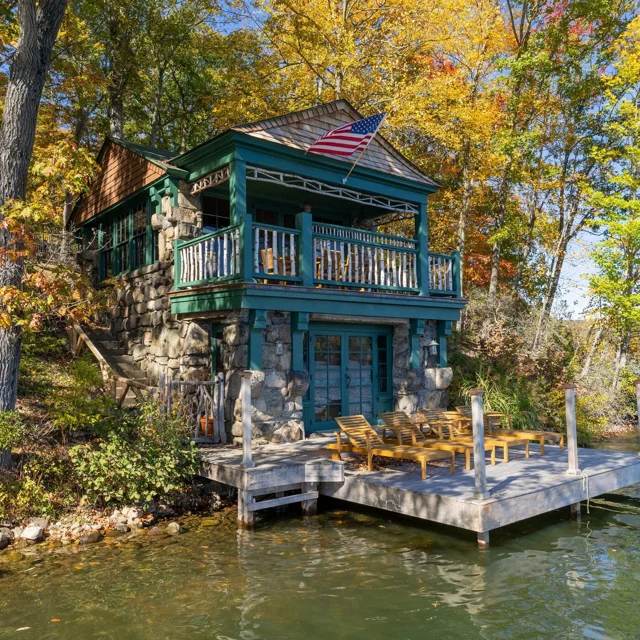
Our boathouse on Tuxedo Lake. Location photograph, not an image of the regatta broadcast.
Featured record · Circulated October 27, 2026
The Board’s proposed response
Chapter 51 · Films and Movie Making
Read the actual proposed changes
The Village’s email, signed “Marc,” announces a Board of Trustees / Code Revision Committee workshop on Saturday, October 31, at 10:30 a.m. at Village Hall. It invites residents to attend and says Code changes will be subject to a future public hearing.
This is a draft circulated for discussion, not an adopted law, an individual filming approval, or a formal answer to every concern raised here.
What changes, in plain English
Commercial gain: deletes the express prohibition on activity undertaken as a business or for commercial gain.
Time: eight hours per approved day; more than ten days in a calendar year requires additional Board approval.
Money: proposes a charge of 25% of homeowner compensation, in addition to a permit fee.
Control: retains prior written Board permission and permits additional conditions, including a police officer for traffic and parking.
Source: October 27 redline, opening paragraph and §51-1(A)–(F). Ten days is not an allowance to film without permission.
Thank you for considering a more practical approach
We thank the Board of Trustees and the Code Revision Committee for showing flexibility and a willingness to bring our laws up to date with the ways people now use cameras, create content, and share community events. Reconsidering the commercial-gain prohibition is a constructive step.
We also encourage the Board to compare practical approaches in similarly situated New York villages as it develops the final language. Our goal is a fair, modern framework that protects the neighborhood while respecting peaceful use of private property.
Our assessment of the draft
Progress, with significant strings attached
Pros
A route for compensated filming
Removing the commercial-gain prohibition would make paid shoots an expressly contemplated part of the permit system.
The draft recognizes approved multi-day filming rather than leaving the eight-hour limit unqualified.
Privacy, safety, and tranquility protections remain. Responsible property use and neighborhood protection need not be opposites.
Cons
No clear distinction for a small shoot
A quiet, short photoshoot still faces prior Board permission. The draft provides no small-shoot exemption or approval deadline.
The 25% charge is based on homeowner compensation, not profit or demonstrated municipal costs.
Police staffing, the annual day count, and additional conditions lack clear small-production thresholds in this text.
“Homeowner,” separate boathouse parcels, and incidental background images need clearer treatment.
The assessment above reads the October redline’s opening paragraph, §51-1(A)–(H), and retained family exception. It does not determine the legality of any past shoot.
Regulate the footprint, not the label
A film crew is not the same as a phone camera
The draft includes photographic sessions, video production, and broadcasting. In our view, actual effects should determine the level of oversight, whether the person filming is a professional producer, a resident, an influencer, or a community organization.
Small photoshoots under $2,500
Potential benefit: the commercial-gain prohibition would be removed. Remaining burden: no exemption protects a small, quiet booking from Board review, the compensation charge, or additional conditions.
A hypothetical $2,000 location payment would produce a $500 Village charge at 25%, before the permit fee and any police costs. Our proposed exemption below uses less than $2,500 in gross location compensation to the owner per project, not the overall production budget.
Social-media creators & influencers
Potential benefit: paid creative activity would no longer face the same express commercial-gain prohibition. Remaining burden: the family exception is limited to noncommercial activity, and the draft does not clearly address a resident’s sponsored post or a creator filming with a phone at home.
A creator’s sponsorship income is not necessarily a location payment to a property owner. The Code should distinguish the two and apply the same low-impact standards regardless of audience size, platform, or popularity.
Community broadcasts & livestreams
Potential benefit: the draft contemplates filming even when the homeowner is unpaid. Remaining burden: that does not create an exemption; §51-1(D) expressly proposes a $100 daily fee paid by the production company when the owner receives no compensation.
A stationary community camera can have a very different footprint from a commercial production crew. Community purpose alone does not answer the draft’s permit requirements.
Larger film & television productions
Potential benefit: paid productions and multiple approved days have a clearer route under Chapter 51. Remaining burden: eight-hour days, additional permission above ten annual days, percentage charges, and potentially costly conditions remain.
Productions needing road control, substantial parking, lighting, or municipal services should have a tailored review. That is not a reason to put every small shoot through the same process.
These are applications of the proposed wording, not determinations about particular applicants. For compensated owners, the draft refers to an additional permit fee but does not separately specify its rate or payer; the $100 rate is explicit in the uncompensated-owner provision.
A recent example · David McFadden’s firsthand account
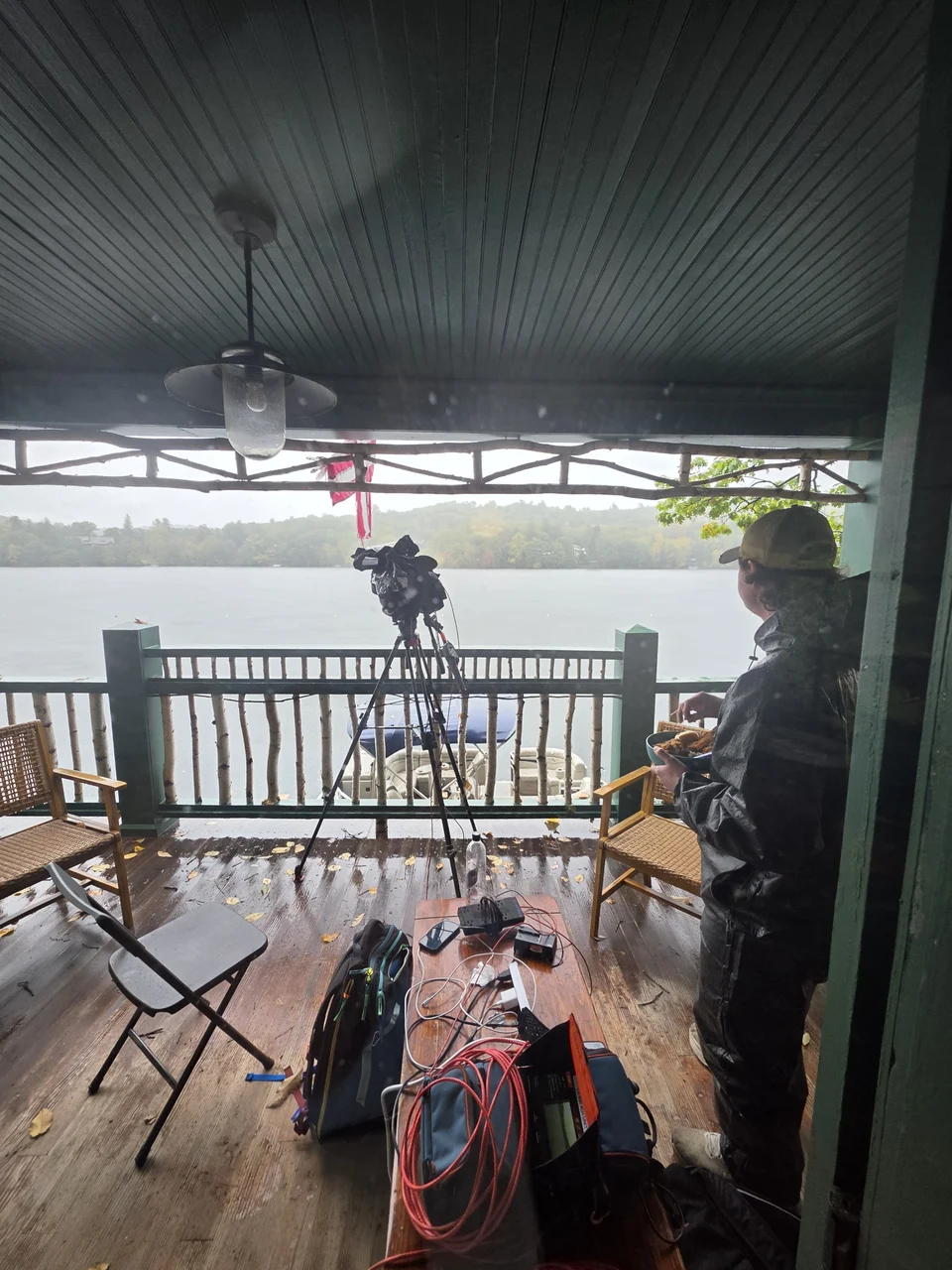
The Club’s continuous live shot from our boathouse
The Tuxedo Club’s regatta camera setup on our boathouse porch. Photograph supplied and identified by David McFadden. View the full photograph.
David reports that the Tuxedo Club used a camera on the McFaddens’ boathouse deck for continuous live coverage of the regatta. He describes it as a smooth, unobtrusive use that caused no disturbance he observed.
That is the practical distinction we want the Board to recognize: a camera on private property does not automatically create a public problem. Quiet community coverage, a small product shoot, and low-impact creator content should be judged by their effects, not simply by whether images are broadcast or someone benefits commercially.
Our proposal, not the Village’s current rule
Small shoots. Written safeguards. No Board approval.
Qualifying low-impact photoshoots under $2,500 should not require individual Board approval, filming permit fees, a percentage-of-compensation charge, or a routine mandatory police detail. The owner should instead agree in writing to clear, enforceable guidelines.
For discussion, “under $2,500” means less than $2,500 in total gross location compensation to the owner for one project, including related booking days; splitting one project into smaller invoices should not create an exemption. The threshold alone is not enough: the activity must also satisfy the low-impact conditions.
The same low-impact route should be available to resident creators and community livestreams, including owner-uncompensated uses, rather than treating a phone camera as a film crew. Large or disruptive productions would remain subject to a proportionate review.
Resident discussion draft · Revision 2 · October 27, 2026
A proposed path forward for the Board and Code Revision Committee
I have prepared a resident-proposed revision to the Village’s filming draft and intend to submit it to the Board of Trustees and Code Revision Committee for consideration. It offers an annual-notice approach for qualifying low-impact activity, written safeguards, and proportionate review for larger productions, without a mandatory percentage payment to the Village.
The marked draft and clean reading copy below are proposals for discussion, not adopted law or an official Village document. Bracketed values, including crew and vehicle limits, the daytime window, and administrative deadlines, remain discussion points rather than settled positions. The final wording should be reviewed by the Village Attorney.
David C. McFadden · Intended for submission; this page does not report a completed submission.
Ordinary personal recording, video calls, lawful security cameras, and documentation of independently lawful private gatherings should not require an annual filming notice. Separately staged or sponsored productions would use the low-impact route when they meet its conditions; paying a photographer should not by itself turn a private celebration into a regulated production.
A practical compromise
One general annual notice, not an application for every shoot
In our view, it is not practical to require the Club to complete an application and secure Board approval for a low-impact regatta broadcast, or to require the same process for every small photoshoot or social-media creator’s session. These activities can depend on weather, event schedules, and short production windows. Oversight should match their actual effects.
A compromise would be a general notice to the Board identifying the property, the responsible owner, and the types of qualifying activity that may occur during the year. The owner would acknowledge the written safeguards in advance, rather than seek separate permission for each occasion.
Illustrative annual-notice language: During the calendar year, the following owner-authorized, low-impact activities may occur at this property, including but not limited to:
Small product, fashion, portrait, or other still-photography sessions;
Social-media content creation, including sponsored content, subject to the same low-impact standards;
Stationary live-camera coverage of the regatta or other community events;
Short interviews and educational, artistic, or community video recording; and
Other comparable filming or photography that satisfies the published low-impact guidelines.
The owner consents to these qualifying uses and agrees to the applicable hours, noise, parking, privacy, safety, and supervision requirements. A named responsible contact will be available during each activity.
The list would be illustrative, not a promise that every activity will occur. “Including but not limited to” would not exempt larger or disruptive activity: every use would still need to meet the low-impact conditions, and paid location shoots would remain subject to our proposed under-$2,500 threshold.
We propose that a complete annual notice be informational, not a discretionary permit application: no Board vote, filming fee, or waiting for an acknowledgment before a qualifying activity can proceed. A material change that takes an activity outside the low-impact category would follow the separate, proportionate review applicable to larger productions.
Separate from the filming rules
Private giving is a personal choice, not a filming condition
We appreciate the Board’s willingness to reconsider the rules. However, in our view, requiring owners to surrender 25% of their compensation amounts to a tax on the peaceful exercise of private property rights, rather than a charge tied to the actual municipal impact of a particular shoot. That is our policy objection, not a legal determination that the proposal is an unlawful tax.
Our proposal is to remove the mandatory 25% charge, not replace it with a Village-directed donation. We are not proposing that the Village instruct owners to give, solicit contributions in connection with filming permission, choose recipients for them, or make a gift part of the annual notice or approval process.
Separately, an owner may independently choose to support a community purpose with a smaller amount of their own choosing. That private decision belongs outside the filming rules. Residents who wish to give on their own initiative could consider:
Gatehouse or traffic-booth improvements: through an authorized fund, if available;
Wee Wah Park and Beach Club: including park and beach improvements;
Free Wee Wah access for Village residents: through a dedicated fund, if established or confirmed;
The Village Trail Committee: trail maintenance and improvements;
The Race Track Nature Preserve: conservation and community access;
TPFYI: voluntary support for independent local information, with its recipient and tax status confirmed before treating a contribution as charitable; and
Other verified 501(c)(3) organizations: selected by the donor to benefit the community.
The Village already publishes donation routes for the Friends of Wee Wah Park Improvement Fund, the Race Track Nature Preserve, and the Village Trail Committee (Village donation information). Those municipal funds should not be assumed to be separate 501(c)(3) organizations.
Recipient names, active fund arrangements, eligibility, and any tax deductibility must be confirmed individually. TPFYI’s own support information directs contributions to Tuxedo Park Communications LLC; we have not verified 501(c)(3) status or deductibility for those contributions (TPFYI’s support information).
No donation should be requested, required, or considered in the filming process. Giving or declining to give should have no effect on a person’s eligibility to carry out an otherwise qualifying activity. For small, low-impact uses, our proposal remains written owner safeguards and an informational annual notice, without an individual Board approval, filming fee, or routine police detail.
The owner’s written commitment
Owner consent and accountability: written permission and a named adult contact reachable throughout, with appropriate on-site supervision during crew work, setup and cleanup. A safely installed stationary camera could operate remotely with timely assistance available.
Limited daytime hours: no more than eight hours in total per day at the location, including setup and cleanup across covered shoots, and no overnight occupancy or lodging. The precise daytime window remains a discussion point.
Quiet equipment and lighting: comply with applicable noise rules; no unlawful noise, intrusive lighting, or interference with road or waterway safety. Mere audibility should not defeat the exemption unless an applicable noise rule makes it a violation.
A genuinely small footprint: declare crew and vehicle numbers and comply with published, objective small-production limits rather than case-by-case preferences.
No public-road burden: lawful parking and access, no road closure or reserved public parking, no blocked emergency access, and no need for traffic-control services.
Privacy and safety: no trespass, no unsafe crowding, respect neighboring privacy, and maintain applicable building, fire, and safety requirements.
Enforcement when warranted: keep the signed acknowledgment available, correct actual violations, and use ordinary enforcement if necessary. An exemption from a routine police detail is not an exemption from the law.
Under this proposal, the general annual notice and written acknowledgment would document compliance, not become another discretionary permit application. The Village should publish the objective limits, explain how repeat days are counted, and make eligible boathouse parcels and entity-owned properties explicit.
Protect the neighborhood without taxing every quiet camera.
We support meaningful safeguards against noise, unsafe access, parking problems, and disruption. We do not believe peaceful, owner-approved activity should need a Board vote, a share of the owner’s compensation, or a police officer simply because a camera is present.
The original draft is preserved separately from our commentary. The regatta example is identified as an owner account, and the under-$2,500 alternative is our recommendation, not an existing legal exemption.
Source notes and unresolved questions
Village notice: October 27, 2026 email, “BOT-Code Revision Committee Workshop on Saturday, October 31 @ 10:30am @ Village Hall,” sent by Denise Spalthoff and signed “Marc.” The meeting details above summarize that notice without publishing private email headers.
Proposed Chapter 51:original one-page redline. The page cites its sections for the proposal’s terms; the circulated document is not treated as enacted law.
Boathouse eligibility: the September 14 Chapter 100 draft contains exceptions for Chapter 51 uses but also same-lot or immediately-adjoining-lot language. The final texts should expressly resolve the relationship for separate boathouses. Read the two-page draft from the Village production, PDF pages 28–29.
Residential use: the published zoning text prohibits boathouse residence purposes; that is not itself a universal exemption for daytime filming (Village zoning code).
Meeting reporting: TPFYI’s October 22 account reports a December hearing was scheduled on the separate nonresidential-structure rental proposal (TPFYI’s Board meeting account). That is secondary reporting, not proof of enactment.
External reading addresses, if a new tab is blocked: https://ecode360.com/11136489 https://www.tpfyi.com/bot.html