The background · Tuxedo Park, New York
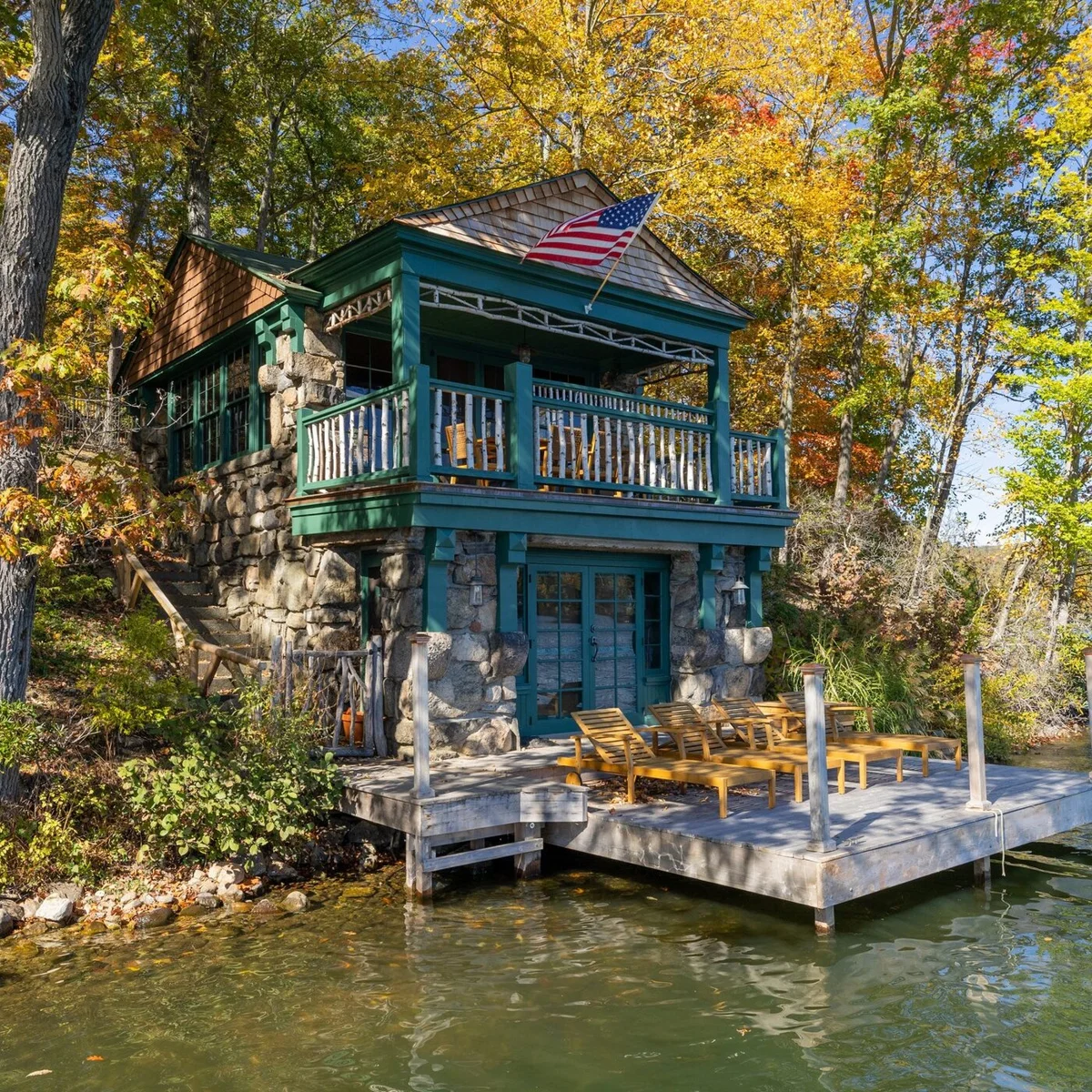
Our historic boathouse.
Your property rights.
David and Robin McFadden are challenging proposed restrictions on daytime photoshoots at their historic boathouse. Their concern is how the same rules could affect other property owners in Tuxedo Park.
Why this site exists
A dispute with wider consequences
How it began
The owners describe one scheduled, owner-supervised fashion photoshoot at their historic boathouse. They say it involved no overnight lodging, tenancy, or transfer of possession.
They object to proposed restrictions that could reach quiet daytime activity, docks, photography, and other uses of private property.
What the owners are asking for
Clear, objective standards addressing actual effects such as noise, parking, traffic, hours, and safety, while protecting peaceful use of private property.
This site presents their position alongside source documents so residents can examine the record and form their own views.
An important distinction
Daytime photoshoots and overnight rentals
Daytime photoshoot
Scheduled, owner-approved activity. The owners describe no lodging, tenancy, exclusive possession, or unrestricted access.
Overnight rental
Residential or transient occupancy is a separate issue. The owners support enforcement against unlawful overnight lodging.
These statements summarize the owners’ position. Read the source materials for the complete arguments and cited provisions.
Foundational record
Start with these documents
Executive summary
The owners’ case concerning the proposed property restriction.
How other communities regulate filming
Comparable approaches to permits and measurable impacts.
A daytime photoshoot is not an overnight rental
The distinction explained in the owners’ submission.
Photography, filming and publication history
Supporting background about photography and filming in Tuxedo Park.
Taxes, regulatory burden and marketability
The background submission on potential effects on property value.
Earlier working papers and records requests
Chapter 51 working paper
Initial background memorandum.
Public-record research inventory
Early supporting research inventory.
Village administrative records request
Request for records under the Freedom of Information Law (FOIL).
Police records request
The original request for Police Department records.
Background correspondence
Letter to waterfront property owners
The owners’ explanation of the concern about docks, photography, and quiet daytime activity.
Read the original letter
Preserved historical correspondence. References to unavailable recordings describe the position when the letter was written; meeting excerpts are now organized on the August and September pages.
Dear Waterfront Property Owner:
Robin and I want to make one point clear at the outset: we do not believe boathouses should be used for overnight rentals. When I served as Mayor, I led the Village's adoption of the Airbnb law intended to prevent that kind of transient lodging. We support the continued enforcement of certificate-of-occupancy, building-code, fire-safety, and short-term-rental requirements that prohibit unlawful residential use.
Our concern is different. A proposed Village law that has been described primarily as a restriction on boathouse rentals may reach much further than overnight occupancy. Read together with Chapter 51's broad and undefined restriction on photography or filming undertaken for “business or commercial gain,” the Village's approach may affect ordinary, peaceful daytime activity on private property throughout Tuxedo Park.
The proposal arose after Robin and I permitted one owner-supervised fashion photoshoot at our historic boathouse. The shoot lasted approximately six hours on a weekday and took place on the dock. There was no lodging, overnight occupancy, tenancy, public attendance, road closure, amplified sound, or transfer of possession.
Continue reading the original letter
The August 19 draft expressly includes a “dock” within its definition of an accessory building. It also restricts the independent use, occupancy, rental, or leasing of accessory structures and defines compensation broadly enough to include remuneration, barter, gifts, services, loans, or other consideration.
That language creates a direct concern for every owner with a dock, whether or not the property also has a boathouse. It is not limited to our property or even to the eight separately assessed boathouses. The Village should state clearly whether it applies to every private dock on Tuxedo Lake, Wee Wah Lake, and Pond No. 3, as well as the Tuxedo Club boathouse and dock and the Village Boat Club staging area and docks.
Waterfront owners without a boathouse or dock also have reason to pay attention. The separate language of Chapter 51 concerns photography and filming throughout the Village and leaves “business or commercial gain” undefined. If the Village interprets that phrase broadly, the issue may extend beyond accessory structures to activity inside a resident's home, on a lawn or terrace, along the shoreline, or in another private or public location.
Consider a resident, guest, model, photographer, or social-media influencer who represents a clothing, jewelry, sporting-goods, design, or other product line. The person might take a photograph or short video inside a lakefront home, outside the home, on the lawn, along the shoreline, on a dock, in a boathouse, or in a public place. The content might later appear in a catalog, advertisement, website, magazine, real-estate listing, or social-media post. Compensation might consist of money, free or loaned products, travel, services, barter, commissions, sponsorship, or another benefit.
Would the Village treat that activity as prohibited or regulated commercial filming even if the owner remains present, the activity is quiet, no admission is charged, no road or public facility is occupied, and there is no measurable impact on a neighbor? Would the answer change depending on whether the image was taken in a public place, inside the person's own home, outside the home, on the shoreline, or on a dock? Would the homeowner be responsible when a guest or family member posts product-related content? The current language does not provide residents with clear answers.
This uncertainty could affect more than professional film crews. It could reach a local business owner photographing a product at home, an architect documenting completed work, a real-estate broker preparing a listing, a preservation group publishing historic images, a charity producing an appeal, the Tuxedo Club preparing promotional material, or an influencer creating a sponsored post with a mobile phone. A rule should not turn otherwise lawful, quiet conduct into a violation merely because someone involved receives compensation or a product appears in an image.
This is not a request to permit Airbnb use or overnight lodging in a boathouse. Existing certificate-of-occupancy and building-code requirements already govern residential occupancy. The concern is that a much broader law could affect peaceful daytime activities involving no lodging or rental, including photography, preservation work, professional services, real-estate marketing, charitable activity, and social use.
At the August 20 Board of Trustees meeting, I objected during public comment. During that exchange, Mayor Citrin stated that the proposed law arose from the photoshoot at our boathouse. The Village's online news archive does not currently list the recording of that meeting, so residents cannot independently review the complete exchange.
Before the Board advances this proposal, I believe residents should ask it to:
- Publish and preserve the complete August 20 meeting recording;
- State clearly whether the proposal applies to every waterfront dock on Tuxedo Lake, Wee Wah Lake, and Pond No. 3, including the Tuxedo Club boathouse and dock and the Village Boat Club staging area and docks;
- Explain how the Village interprets “business or commercial gain” when a resident, guest, photographer, model, or social-media influencer creates content in a public place or inside or outside a private home;
- Explain whether money, free or loaned products, sponsorship, commissions, barter, services, or other benefits change the Village's treatment of otherwise quiet activity;
- Explain the documented public-welfare problem the proposed law is intended to solve;
- Distinguish unlawful overnight lodging from peaceful, owner-supervised daytime activity;
- Evaluate the effect on separately deeded and separately assessed waterfront parcels;
- Create a clear safe harbor for low-impact, owner-supervised photography, filming, social, charitable, educational, professional, preservation, real-estate, and creative activity; and
- Use objective, impact-based standards addressing noise, traffic, parking, lighting, hours, crew size, road use, safety, and municipal services instead of a broad prohibition based primarily on compensation or content.
Please review the proposed law and supporting public record on this site. I encourage you to contact the Mayor, Trustees, John Ledwith, and the Village Clerk and ask for a clear explanation before the proposal moves forward.
Respectfully,
David and Robin McFadden
28 Pepperidge Road
Tuxedo Park, New York 10987
Owner, separately assessed boathouse at 61 Turtle Point Road
mac4tux@gmail.com
(917) 576-2484
Follow the meeting record
Videos, submissions, and follow-up documents are organized by meeting.